

Solving the Lab-to-Fab Skills Gap: Festo’s Semiconductor Learning Factory Debuts at SEMICON West
SAN FRANCISCO, CA – Festo Didactic, a global leader in technical education and industrial workforce development, will showcase its new Semiconductor Learning Factory at SEMICON West, alongside Festo automation innovation and product solutions. As AI and chip innovation accelerates digital transformation across all manufacturing sectors, Festo Didactic is bridging the skills gap between fast-moving technology adoption and workforce capability.
The skills gap in semiconductor manufacturing affects many occupations, including quality assurance and control, safety, supply and logistics specialists, as well as numerous engineers in R&D, automation, process automation, and metrology. According to projections from the Semiconductor Industry Association, 115,000 new jobs will be created by 2030 with roughly 58% expected to go unfilled. The majority of the unfilled roles will be maintenance technicians (39%), the essential workers responsible for maintaining equipment and keeping cleanrooms operational.
“Semiconductor training is a national necessity to maintain economic competitiveness and solve the talent shortage,” said Ted Rozier, Director of Digital, Advanced Technology, and Robotics at Festo Didactic North America. “From a macroeconomic standpoint, Festo is developing the infrastructure and human capital needed to stay ahead in the global chip race.”
Hands-On Learning: The Semiconductor Learning Factory
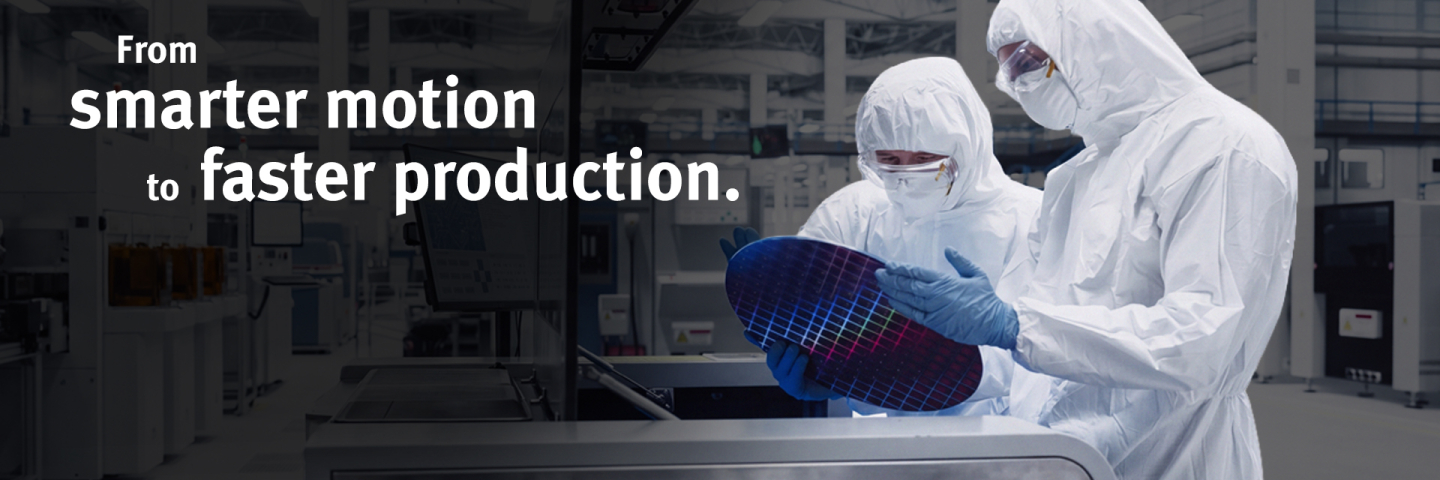
The Semiconductor Learning Factory from Festo is a first-of-its-kind training system built to address the talent shortage in the U.S., and give learners an immediate competitive edge in the workforce. By simulating a real fab environment, students learn how to properly handle delicate silicon wafers, and operate sophisticated tools after the photolithography process, using metrology instruments to ensure precision at the nanoscale. Students also gain experience with high-purity valves, vacuum technology, and precise air quality management - skills essential for semiconductor manufacturing that compliment the standard maintenance technician job role.
At SEMICON West, Festo Didactic will demo its customizable Cyber-Physical Lab, configured as a downsized Semiconductor Learning Factory. Designed specifically for front-end wafer handling, cleanroom operations, and quality control, the interactive display demonstrates key skill sets required for front-end manufacturing workflows:
- Camera Inspection Application: The camera takes images of a 100 mm silicon wafer to ensure that the wafer was processed correctly. The camera station uses AI to analyze the images to detect any defects.
- Statistical Process Control Table: A manual inspection station equipped with a digital microscope to teach technicians how to analyze wafer defects, manage process data, and manually train automated vision systems. The station includes a pneumatic vacuum wand to safely manage wafers without causing electrostatic damage.
- Human-in-the-Loop Pick-by-Light Station: Demonstrates interactive automation that keeps human oversight integral to checking accuracy, managing process data, and validating product quality on the shop floor.
- Traceability & Dicing Operations: Integrates a laser engraver station to perform key product traceability operations such as real-time wafer dicing, etching and process tracking to maintain status of product throughput.
“As an industrial workforce development partner, our job doesn’t end once we have the training systems installed. It’s a continuous effort with educators and employers to scale the competencies needed to fill these new and exciting roles.” Rozier explained.
AI Production Training: Hardware and Software Curriculum
In industry, Festo AX supports predictive maintenance and ensures product quality and energy efficiency. Festo AX can reduce factory downtimes by 25%, cut waste by 20% and reduce leakages up to 65%. In a similar fashion, Festo AX for Learning Factories teaches students and augmented workers how to capture, visualize, cluster, and analyze process data using machine learning.
Festo AX is used in the Cyber-Physical Lab to monitor the performance of the stopgate, the vital piece of equipment that delicately positions the workpiece carrier at each application station. The AX platform uses sensors to track the time it takes the pneumatic cylinders to function, providing real-time information on the health of the cylinder.
The interactive display also integrates AI software for real-time condition monitoring. The image recognition condition monitoring is a proactive maintenance approach that uses computer vision, deep learning, and image processing to analyze visual data such as photos, video feeds, or thermal imagery to assess the health of assets and predict failures. Workers learn to leverage predictive analytics and predictive maintenance to minimize costly fab downtime.
“The goal is always to save customers time, energy, and costs, while improving overall manufacturing performance and productivity. These are the skills our learners acquire,” Rozier added.
Online Curriculum for Semiconductor Manufacturing
To complement the physical hardware, Festo will demonstrate over 40 hours of interactive digital curriculum available on the Festo LX online platform. Developed to support community colleges, universities, and industrial partners, including regional workforce initiatives with Portland Community College and Florida State College Jacksonville, the courseware targets six key categories:
- Electrostatic Discharge and Ionization Management in the Semiconductor Industry
- Wafer Handling in the Semiconductor Industry
- Industrial and AI-Supported Image Processing in the Semiconductor Industry
- Data Management and Visualization in the Semiconductor Industry with Festo AX
- Smart Cleanroom in the Semiconductor Industry
- Environmental Control in the Semiconductor Industry
Acquiring Semiconductor Qualifications via Certifications
The Festo Industry Certification Program (FICP) is organized into levels that allow students to progress from basic machine operation to complex systems engineering. AI and semiconductor topics are integrated into the higher levels of this framework. Once students acquire mechatronics skills taught in FICP Levels I through Level III, they can advance to the Semiconductor Learning Pathway to earn industry-approved micro-credentials.
The Fundamentals of Semiconductor Manufacturing Certification emphasizes cleanroom safety, PPE and gowning procedures, contamination and electrostatic discharge (ESD) control, cleanroom classification standards, environmental monitoring, security and access control, and proper wafer handling. Through instructor-guided activities and hands-on laboratory exercises via the Semiconductor Learning Factory, learners develop practical skills applicable to entry-level semiconductor manufacturing and fabrication environments.
“By utilizing real industrial components, Festo ensures students and augmented workers learn on equipment that matches the industrial DNA of multi-million dollar semiconductor fabs.” Rozier said. “As semiconductor technology evolves, Festo will continue supporting educational institutions, manufacturers, and government workforce initiatives (such as the CHIPS Act) by providing end-to-end support. This includes turnkey learning space planning, lab equipment, digital coursework, train-the-trainer instruction, and industry-recognized certifications.”
Experience the Semiconductor Learning Factory and see firsthand how Festo’s custom solutions support teaching and workforce development goals.
Visit Festo Didactic at Booth #1053 (South Hall) during SEMICON West to meet one-on-one with a training expert. Schedule ahead by filling out this form.