Solve machine setting issues using the latest cylinder sensor technology
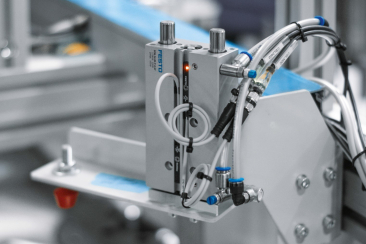
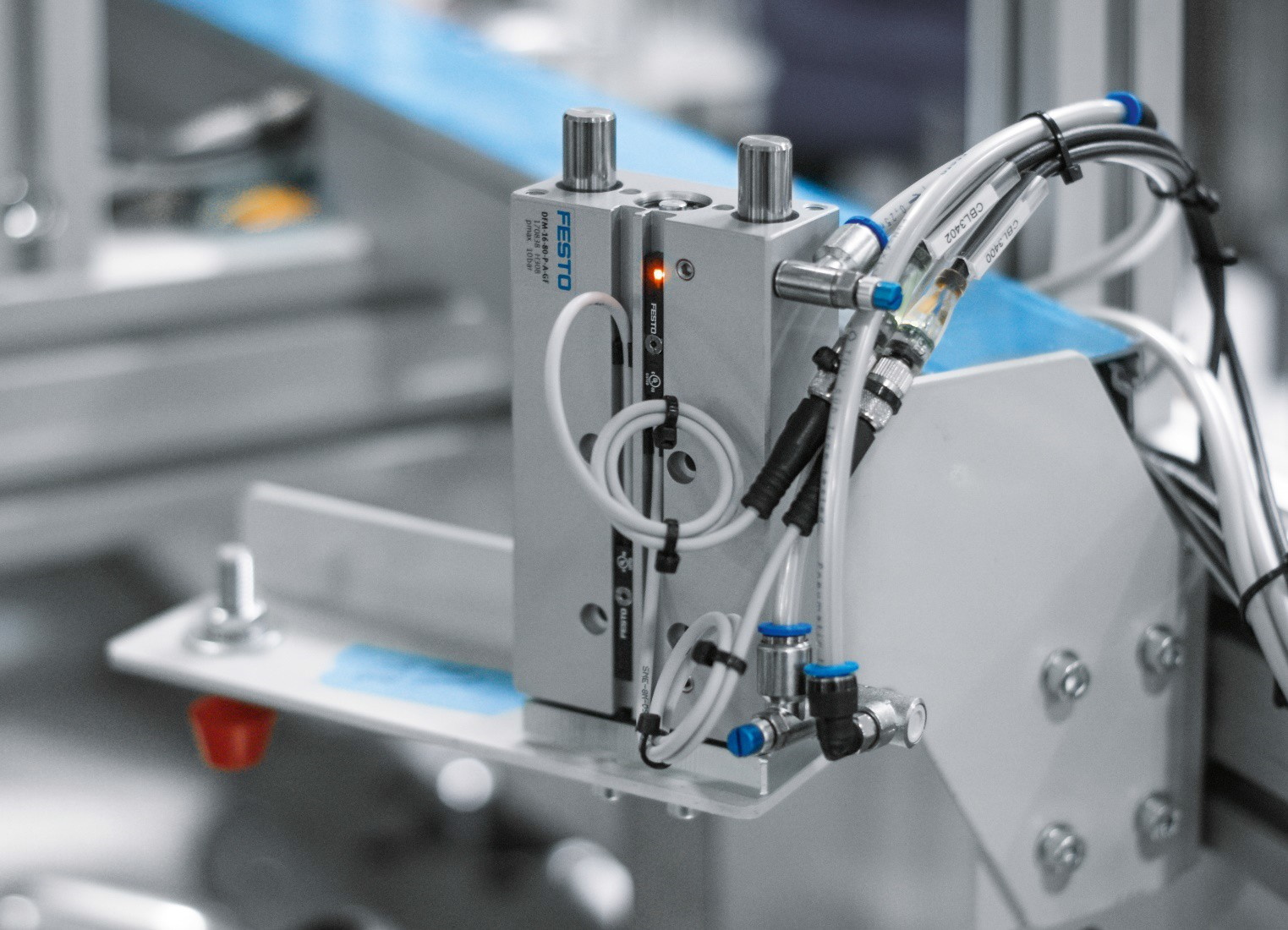
Modern automation machinery uses positional feedback to trigger sequential movements. In pneumatic applications, this takes the form of cylinder sensors that detect the position of the piston within the actuator. Similarly, the sensors act as movement reference points in electric axes and prevent clashes or over-runs.
“Solid-state switches are today's default technology option,” says Steve Sands, Head of Product Management at Festo GB. “Their absence of moving, mechanical components gives them a long lifespan, with mean time between failure (MTBF) of more than 4000 years. This means solid-state switches are the technology of choice over traditional reed switches in around 90% of pneumatic and electric drive applications.”
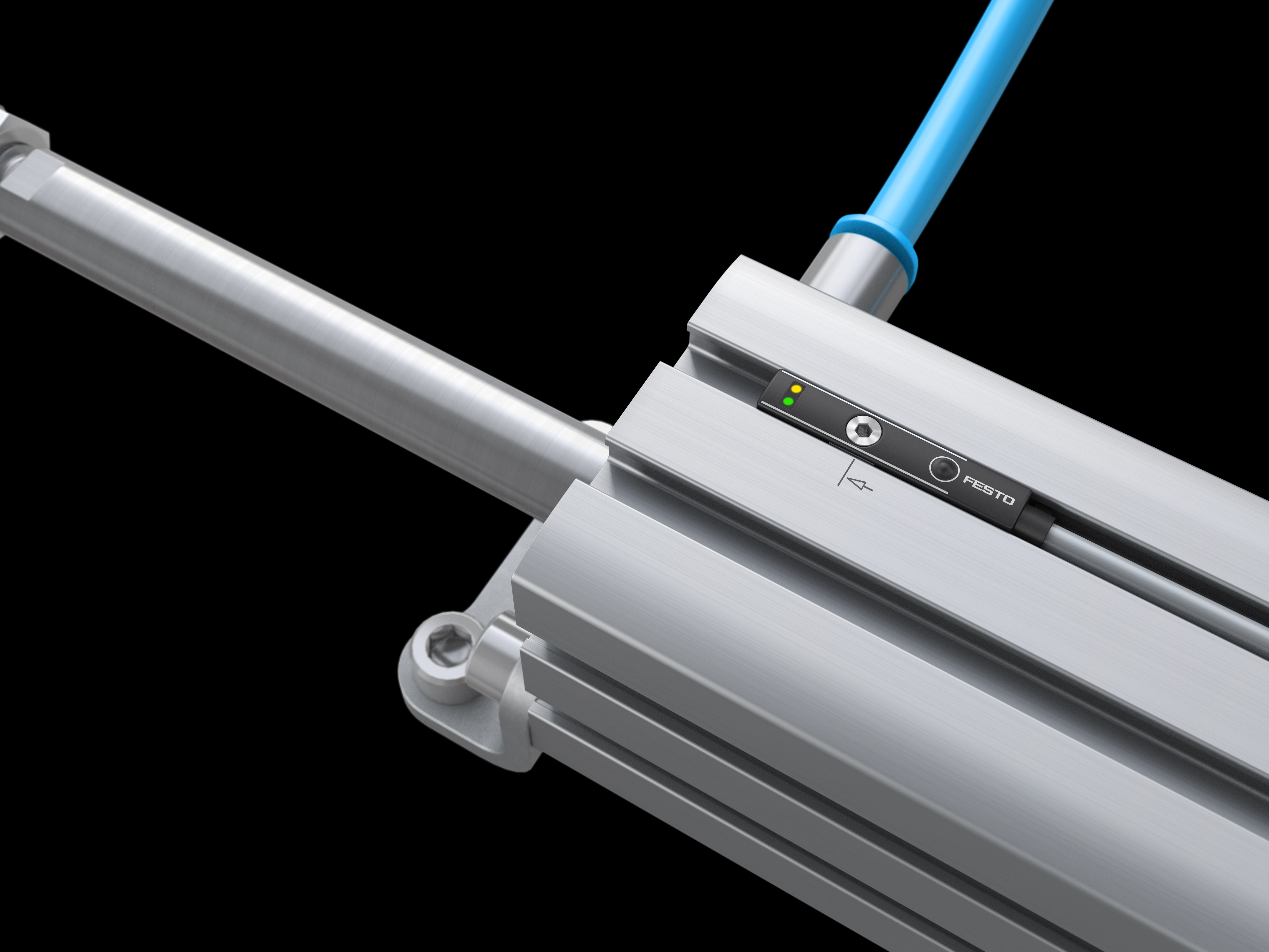
Solid-state sensors are typically constructed with four magneto resistive sensors connected in a Wheatstone Bridge. When the cylinder piston magnet reaches the solid-state switch, the individual sensors' resistance changes, altering the bridge voltage. After amplification and processing, this creates an output signal from the solid-state sensor. As a result, solid-state sensors are protected against overload, reverse polarity and short circuits. They are also immune to wear and tear and insensitive to inductive and capacitive loads. Typically, the maximum current is 100 mA, and the maximum cable length is 30 m.
The latest solid-state sensors from Festo have moved the technology on another step. The Festo SDBT-MSX incorporates Hall Effect sensors and a micro-controller that enable approximate setting of the sensor, with the actual switching point being 'self-taught' by cycling the actuator a few times. This means that the actuator is driven to its end positions and the sensor learns the required switching point. Adopting this technology saves set-up and commissioning times and means a person doesn't have to enter inside the machinery whilst the power is on, reducing risk.
Incorporating a micro-controller also means that the sensor’s functions – NPN or PNP switching, Normally Open or Normally Closed switching, or output signal duration – can be modified easily: meaning maintenance or service engineers can solve multiple issues with a single device.
More information about Festo’s cylinder switch range can be found here: www.festo.co.uk/cylinderswitch
Festo is a global leader in automation technology setting international standards in industrial automation and technical education. The company provides pneumatic and electric automation solutions for factory and process automation across a wide range of industries.
Digitalisation, artificial intelligence and the rapidly growing LifeTech sector, including medical technology and laboratory automation, are becoming increasingly important areas of innovation for Festo. Sustainability, reducing its CO2 footprint, digital learning, innovation, performance and speed are key drivers for the company's future.
Festo products and services are available in 176 countries. With around 20,600 employees in more than 250 branch offices in around 60 countries, the company achieved a turnover of €3.33 billion in 2025. More than 8% of this is reinvested in research and development, and as a learning company, 1.5% of turnover is invested in basic and further training.
Festo Didactic, the company’s technical education and training division, is a leading global provider of technical training solutions, offering comprehensive digital and physical learning environments for industrial skills development.