This content was translated automatically.
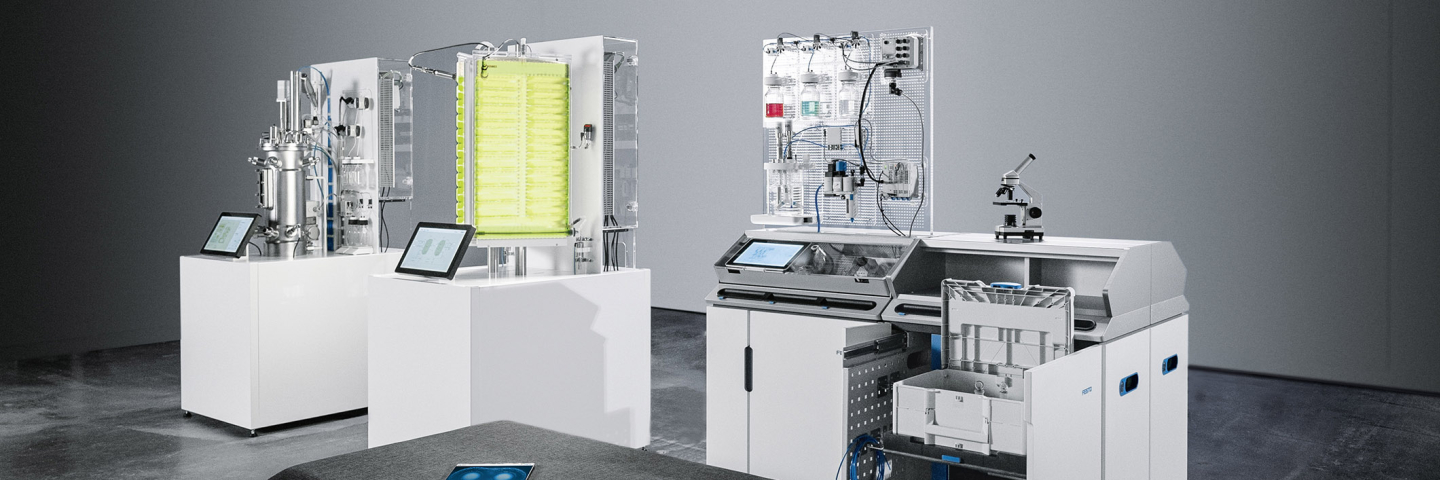
Automation of bioreactors for algae, bacteria and yeasts
In order for microorganisms such as bacteria, algae and yeasts to grow ideally and to produce a lot of biomass, environmental conditions must be created in the reactor that are precisely tailored to their needs. This requires the measurement, recording and control of many process variables.
The constant supply of nutrients (liquid media), but also of air, oxygen or other gases and their even distribution in the reactor play a decisive role. For this purpose, Festo provides actuator and sensor components and solutions from the fields of gas handling, liquid handling, motion and control technology - right through to the ready-to-install control cabinet.
Bioreactor
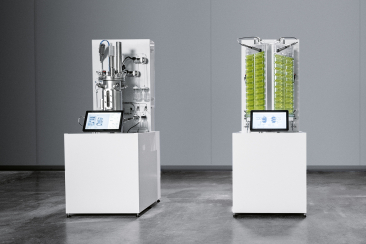
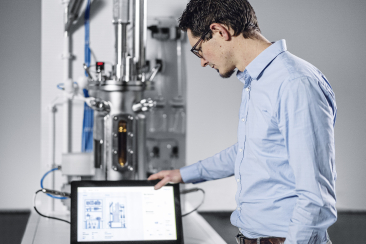
The stainless steel bioreactor with components from the Festo product portfolio, which is frequently used in industrial biotechnology, is suitable for cultivating microorganisms such as E. coli. More about the bioreactor: BioTech Automation | Festo EN
Algae reactor
Photosynthesis is a central metabolic pathway for the growth of algae. During this process, CO2 is converted into sugar and oxygen is released. The two flat-panel airlift photobioreactors (FPA) from Subitec, each with a capacity of six liters, enable the productive cultivation of microalgae through the optimal use of light, CO2 and nutrients. More about the algae reactor: BioTech Automation | Festo EN
Learning reactor
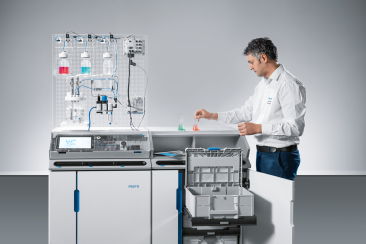
Festo is not only meeting the new challenges in the field of biologization from a technical perspective, but as a market leader in technical training and further education, it is also keeping an eye on the qualifications required in the future.
The learning reactor demonstrates a modular concept with learning software and hardware for the technical basics of biomechatronics. More about the learning reactor: BioTech Automation | Festo EN
Customized solutions
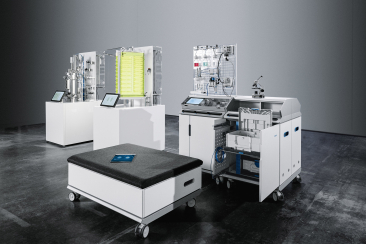
In addition to individual components, Festo also offers customized system solutions for bioreactors. Customized automation solutions are developed from selected components, for example in the form of complete control cabinets. In addition, customer-specific software can be created, from the controller to the cloud. Seamless integration of the systems and the ability to analyze data in real time enable efficient and transparent process control.