Ce contenu a été traduit automatiquement.

Automated processes for battery recycling
After more than 2,000 charging and discharging cycles, i.e. after around 300,000 kilometres driven and after around 8 to 10 years, the batteries of electric cars are hardly profitable any more. The reason: compared to a new system, the reduced charging capacity of the batteries considerably shortens the range. However, a residual capacity of around 80% gives the batteries a second life, for example as part of a battery farm. With increasing automation of dismantling, the recycling process will become more flexible and dynamic, which will also make material available for reuse more quickly. Festo is driving this development forward with a view to its vision of a sustainable circular economy.
Automated recycling
However, before used vehicle batteries are recycled, they are used after removal from the vehicle in so-called "battery farms" or stationary storage systems, for example. At the end of a battery's life, however, it must be professionally recycled. The first step is to mechanically dismantle the packs into modules, battery cells and other components - until now a manual, difficult and time-consuming task. Festo already offers modular automation concepts that speed up and simplify this process.
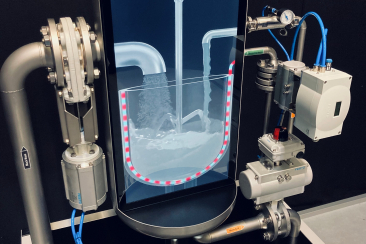
The next step is to separate materials such as metal, plastics and others. However, the focus here is not exclusively on the automation solution. Festo offers suitable process automation products for hydrometallurgical recycling processes in particular. Different process valves are used for gaseous, solid or liquid materials.
Dismantling systems for modules and packs
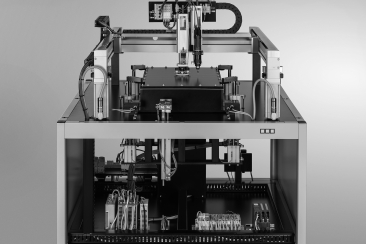
Specialised factory systems are already being planned for these tasks. Festo has already developed and presented its first mechanical modular disassembly system for battery modules and packs. Both handling and gripper systems as well as proven components from Festo's pneumatic and electrical automation portfolio are used.
Festo is also already focussing on the future of electromobility: The company is involved in research into manufacturing concepts for new types of solid-state batteries. Experts predict that these even more powerful storage systems will replace the current lithium-ion batteries in the coming years.
Requirements of the new giga-factories for production sites
Large areas, favourable transport connections, low development costs and a secure and sustainable energy supply are important prerequisites that are usually found far away from urban centres. An important aspect is having enough skilled labour. The conversion to electromobility will not only create new factories, but also new tasks, fields of activity and job profiles. Employees need to be educated and trained for this.
Qualification necessary
Festo Didactic offers targeted further training programmes. Here, employees receive the expertise they need in highly automated production. The programmes include practical hands-on training in the plants, the establishment of in-house learning factories and digital learning content that can be accessed on the Festo Learning Experience (Festo LX) at any time and from any location - including on the topic of sustainability.